
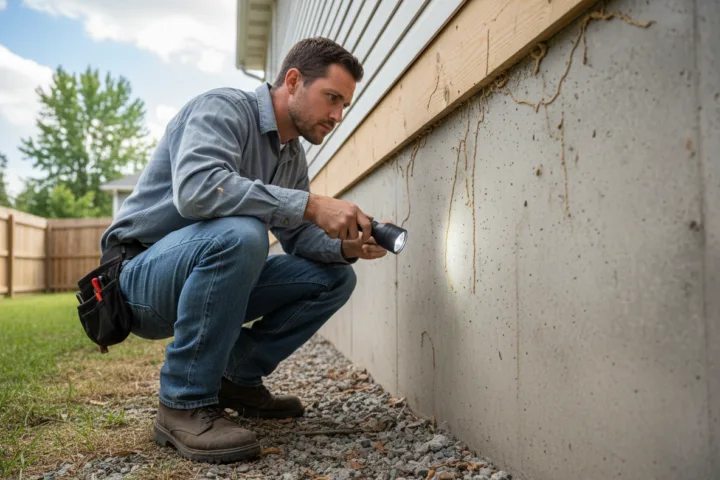
Termites do their damage out of sight, which is exactly why an inspection is worth the trouble. By the time a floor feels soft, they’ve likely been there for a long while.
What an inspector checks
Foundation walls, crawl spaces, the attic, door frames, window sills and anywhere wood sits close to soil. They’ll look for mud tubes, damaged wood, discarded wings and moisture that invites termites in.
Buying or selling a home
Lenders and buyers often ask for a wood-destroying insect report, particularly with some loan types and in certain states. Ask whether the inspector can provide the form you need.
What to do if you find something
Don’t break open the mud tubes or spray them. Disturbing termites can send them somewhere harder to find, and it makes the inspector’s job tougher. Take a photo and leave them be.
Call and tell us what you’ve found. We’ll check who can come take a look near you. If activity is confirmed, read about termite treatment options.
Signs you may need termite inspection
- Pencil-thin mud tubes on foundation walls
- Piles of small, identical wings near windows
- Wood that sounds hollow when tapped
- Bubbling paint or doors that suddenly stick
What the visit usually covers
- Interior and exterior visual inspection
- Crawl space and attic checks where accessible
- A look at moisture and wood-to-soil contact
- Findings and recommendations from the inspector