
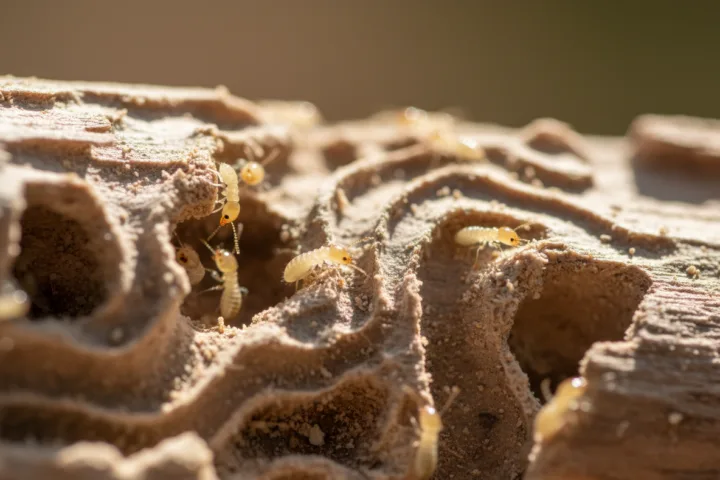
Finding termites is stressful, but the colony is rarely going to bring the house down overnight. You have time to ask good questions. You just don’t want to let it drift for months.
The main options
- Liquid soil treatment creates a treated zone around the foundation that termites pass through or can’t cross.
- Baiting systems are placed around the home and work slowly to affect the colony.
- Fumigation or heat is used for drywood termites, which live inside the wood instead of in the ground.
Which one fits depends on the species, how your home is built and how far things have gone.
Questions worth asking
How long does protection last? Is there a warranty, and does it cover repairs or only re-treatment? What’s the yearly renewal? Get the answers in writing and compare at least a couple of quotes on anything big.
What affects the cost
The size and construction of the home, the type of termite and the method all change the price a lot. Fumigating a whole house and spot-treating one wall are very different jobs.
Call now and we’ll check who can help in your area.
Signs you may need termite treatment
- Termites confirmed by an inspection
- Swarmers indoors in spring or after rain
- Mud tubes that rebuild after being removed
- Sagging floors or damaged trim
What the visit usually covers
- Confirming the type of termite
- Recommending a treatment method
- Treatment by the provider you choose
- Information about warranties and renewals