
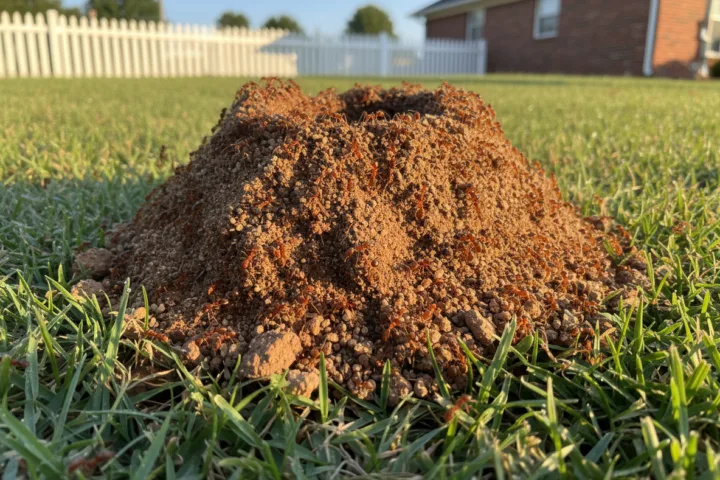
Fire ants attack together when a mound is disturbed, and they can sting repeatedly. In much of the South, they’re a fact of life, but you don’t have to let them take over the yard.
What usually works
Baits spread across the lawn get carried to the colony, while individual mound treatments work on the ones you can see. Combining the two often gets better results than chasing mounds one by one.
What not to do
Don’t pour gasoline or other chemicals on a mound. It’s dangerous, it’s bad for the soil, and it usually doesn’t work well.
After a sting
Wash the area and don’t pop any blisters. Trouble breathing or facial swelling means call 911.
Mounds popping up all over? Call and we’ll check who can help near you.
Related reading: ant control and how to identify common ants.
Signs you may need fire ant control
- Fluffy dirt mounds, especially after rain
- Painful stings that form white blisters
- Ants swarming when the soil is disturbed
- Mounds near play areas or walkways
What the visit usually covers
- Identifying fire ants and mapping mounds
- Bait or mound treatment
- Yard-wide options
- Advice on when to re-treat